
To tell you I had some trepidation about a movie centered around Willy Wonka’s origin story is a little bit of an understatement. Back in the summer of 2021 I read Roald Dahl’s “Charlie and the Chocolate Factory”, watched and wrote about Willy Wonka and the Chocolate Factory (1971), and then did the same for Charlie and the Chocolate Factory (2005) a few weeks later. I was, to be frank, over a whimsical tale of a kid winning all the sweets he can stomach. So imagine my horror a few months later when Wonka was announced:

I did not get my wish, but I did successfully put off watching it for 18 months because it “wasn’t part of The List”, so I had a (incredibly) flimsy excuse why I didn’t make the effort. I did concede that yes, it did look adorable, and yes, I thought Timothée Chalamet was an interesting choice of casting for Wonka. But Johnny Depp’s creepy smile was still lodged into my brain, and I wasn’t ready to torment myself yet.
It was more than halfway through 2025 when my curiosity finally got the better of me. And man, I should have been more open-minded back then because this movie is goddamned adorable.

Paul King (who had previously directed Patrick Willems’ endorsed Paddington and Paddington 2) did a fantastic job creating a delightful, imaginative world that absolutely fits narratively with the other Dahl-adapted movies. Having over-the-top big baddies that discipline children in questionable ways? Check. Showcase products that defy all laws of physics but are directly created to inspire child-like wonder? Check. Empowering underdogs to use their brains to succeed, flaunt their success in the faces of the big baddies causing their downfall, while simultaneously spreading joy to all those who believed in the dream? Check, check, and CHECK. Not once did I spend a moment questioning the validity of this story in the extended Willy Wonka universe.
For all the effort the marketing team made to hide the shameful fact Wonka was a musical, the first few seconds of the film have Timothée Chalamet singing his heart song while gliding into London on a boat like Sweeney Todd (with much less sinister intentions). Designed to be a companion piece to the 1971 film, Wonka tells the story of a young up-and-coming chocolatier who travels his way to the big city hoping to make a name for himself by selling his unique confections. Willy is guided by his mother’s advice that “every good thing in this world started with a dream” and he believes if he lets this principle guide him, not only will he do what he loves, but it will bring him closer to his dearly departed mother. Not yet hardened by the world, he allows himself to look at an empty storefront and picture how happy he could make everyone with his chocolate (but then immediately gets fined for daydreaming).
This precious little cinnamon bun’s kind-hearted and generous nature quickly drains the few funds he does have, leaving him to fashion a makeshift bed out of a park bench. Much like Paddington, Willy stores his most important food in his hat and undeterred by his extremely recent fall into poverty, pours himself a hot chocolate nightcap. He’s then approached by a curious dog and Mr. Bleacher (Tom Davis), who offers the destitute Wonka a place to lay his head lest he freeze to death exposed to the elements. Back at Mrs. Scrubitt and Mr. Bleacher’s Laundry House, Wonka is offered a nip of gin which lubes him up enough to sign a sketchy contract with lots of fine print that even Noodle (Calah Lane), the resident urchin, warns him to actually read before presenting his name. Even though he has no funds of which to pay for the room, he promises Mrs. Scrubitt (Olivia Colman) that the next morning he will earn his fortune and make things square between them.
This is delightful. While Timmy Tim doesn’t have the strongest voice, he 100% understands the assignment and entirely embodies an optimistic and enterprising Wonka before he was beaten down into the paranoid shut-in who views his profession almost as a burden. Timothée Chalamet got himself in a bit of shit not too long ago (and honestly, I think the media made a pretty uncharitable interpretation of what he was trying to say), but to me he’s the most theater kid who has ever theater kidded – Just incredibly invested in every project he’s involved in. It’s refreshing to watch someone in a musical go whole hog instead of being embarrassed of the art form, so shoutout to my boy Timothée.
But no shoutout to the blacklisting McCarthyism government of the late 50s. No shoutout there.

The first hurdle Wonka runs into is a well-connected and established Chocolate Cartel – Slugworth (Paterson Joseph), Ficklegruber (Mathew Baynton) and Prodnose (Matt Lucas). Their wardrobe match that of their countenance – Fickelgruber, in green, is obsessed with money and gags each time someone mentions the poor; Prodnose, in yellow, is the more soft-spoken and cowardly member of the party that constantly gets railroaded over; and Fickelgruber, the ringleader, is in a royal blue, making the most important deals and decisions that help preserve the group’s power. Prodnose’s alarm bells immediately go off the moment Wonka shows up on site with flying chocolate, and him and his two co-conspirators wander over to gaslight him into thinking his marshmallow, caramel and cherry chocolate is disgusting and he will never hack it… until a few moments later when the three of them start to float.
If Bob’s Burgers has taught me anything, it’s that kids don’t care about the taste of something if there is a solid gimmick, and man, having a fly hatch in your stomach and flap its wings so hard that you take flight before it eventually rockets out your butt sounds like something the Belcher children would invent. The whimsy of this world is immediately apparent, from Wonka’s Mary Poppins-esque hat, the impossibly long hotel parishioner contract, and humans casually flying in the sky; Unusual things are presented without cynical questioning of its existence. The second the chocolatiers leave the ground the entire crowd of people devour Wonka’s stash so they can experience life up high.

A few moments later the police, led by Chief of Police Keegan-Michael Key, show up to disperse the crowd and physically hook the floating people to drag them back down to earth. Keegan-Michael Key is my favorite in this, sporting an old timey New Yorker accent and dropping lines like “Nothing to see here, just a small group of people defying the laws of gravity”, followed by “It’s going to a good cause… sick kids or something,” when he confiscates Wonka’s earnings, leaving him with a single silver sovereign to pay off his room (thanks to the kindness of Kobna Holdbrook-Smith’s Officer Affiable).
Returning to Scrubitt and Bleacher’s slightly defeated, Wonka discovers that disregarding the small print was now going to land him 27 years and 16 days working off all the room upcharges, lending a whole other meaning to the hotel’s motto “Come for a night – stay forever!”. He doesn’t have to do it alone, however, as he encounters four other friends who failed to read the terms and conditions and suffer a similar fate – accountant Mr. Carson Abacus Crunch (Jim Carter), plumber Piper Benz (Natasha Rothwell), phone operator Lottie Bell (Rakhee Thakrar), and comedian Larry Chucklesworth (Rich Fulcher). Everyone’s names in this movie are so delightfully on the nose, including Noodle’s, because although she is incredibly smart and loves to read, she doesn’t have much of a backbone. Believing escape is impossible and resigned to their fate, the indentured servants key-in Wonka on his decades-long future of laundering day in and day out.
Noodle, offering turndown service in Wonka’s new leaky lodgings is stunned when Willy confesses he forwent learning to read (Noodle’s favorite pastime) so he can singularly focus on his chocolate studies. She simiarly has no interest in Wonka’s hobby and confesses she has never tasted chocolate. Absolutely flabbergasted by the news, Wonka pulls out his travel factory to drop exposition about his childhood while crafting Noodle her first ever sweet treat. In an incredibly Charlie Bucket-coded backstory, Wonka’s love of chocolate was instilled in him by Paddington’s his mother (Sally Hawkins), who only had enough money to make him one bar of chocolate on his birthday. He still carries the last one she made him before she died, constantly attempting to recreate how happy and safe he felt when she was alive in his own creations. If he can follow his dreams to share his chocolate with the world, he hopes she’ll keep her supernatural promise to be at his side in that moment.
After getting the full understanding of Wonka’s motivation, Noodle uses her… brain to hatch a plan. Mrs. Scrubitt is singularly focused on money, so if she is distracted by an rich aristocrat she won’t notice her entire laundry operation is otherwise occupied. But where to find this aristocrat? Wonka knows of one sleeping right under their noses.


The lightbulb gag never fails to get a giggle out of me.
Meanwhile, we’re confronted with the government-mandated Rowan Atkinson cameo. The Police Chief needs his sugary fix, and the similarly corrupt priest allows him into the moderately secret subterranean lair of the Chocolate Cartel that is located in a bank vault under the church. The Chief gets chocolate kickbacks every time his police force runs another aspiring bright-eyed and bushy-tailed chocolatier out of town. The cartel is, however, specifically scared of Wonka’s business acumen because he makes his chocolate the worst of all words… affordable. They request the Police Chief to make Willy take a long walk off of a short pier. When he initially rebukes their offer, they up the return so… robustly The Chief can’t possibly refuse.
I want Keegan-Michael Key in every musical from now on. It’s kind of insane that I haven’t watched Schmagdoon yet.
The next morning, Wonka and Noodle set their plan into action. First, Wonka points out Mrs. Scrubitt’s sultry love-dripped intentions behind the shrieking orders she barks to Mr. Bleacher and suggests if Mr. Bleacher slutted it up a bit and showed some thigh, she may pounce on him. Noodle very subtly suggests to Mrs. Scrubitt that Mr. Bleacher is an undercover Bavarian aristocrat. Once the two are reunited minutes later, their fast-paced romance blinds them from Wonka rolling into a laundry bin and shuffling his way out the door.
TINY complication though. The chocolates Wonka had planned on selling were stolen by… Oompa Loompas. He can make more, of course, but he first needs to break into the zoo in order to milk a giraffe, because through some strange series of circumstances Wonka discovered giraffe milk is the best milk to make chocolates, I guess.
This is the moment where Noodle realizes this sweet man raving about small orange men with green hair might be entirely off his rocker and placing so much trust in him might have been… misguided. Especially since his methods of incapacitating people, like, for example, zoo guards, involve getting them wasted on chocolate and drunk dialing their childhood crushes. But alas, it enables Noodle to pet a giraffe and reveal her mysterious necklace with a “N”, the only remaining item she has to remember her parents.
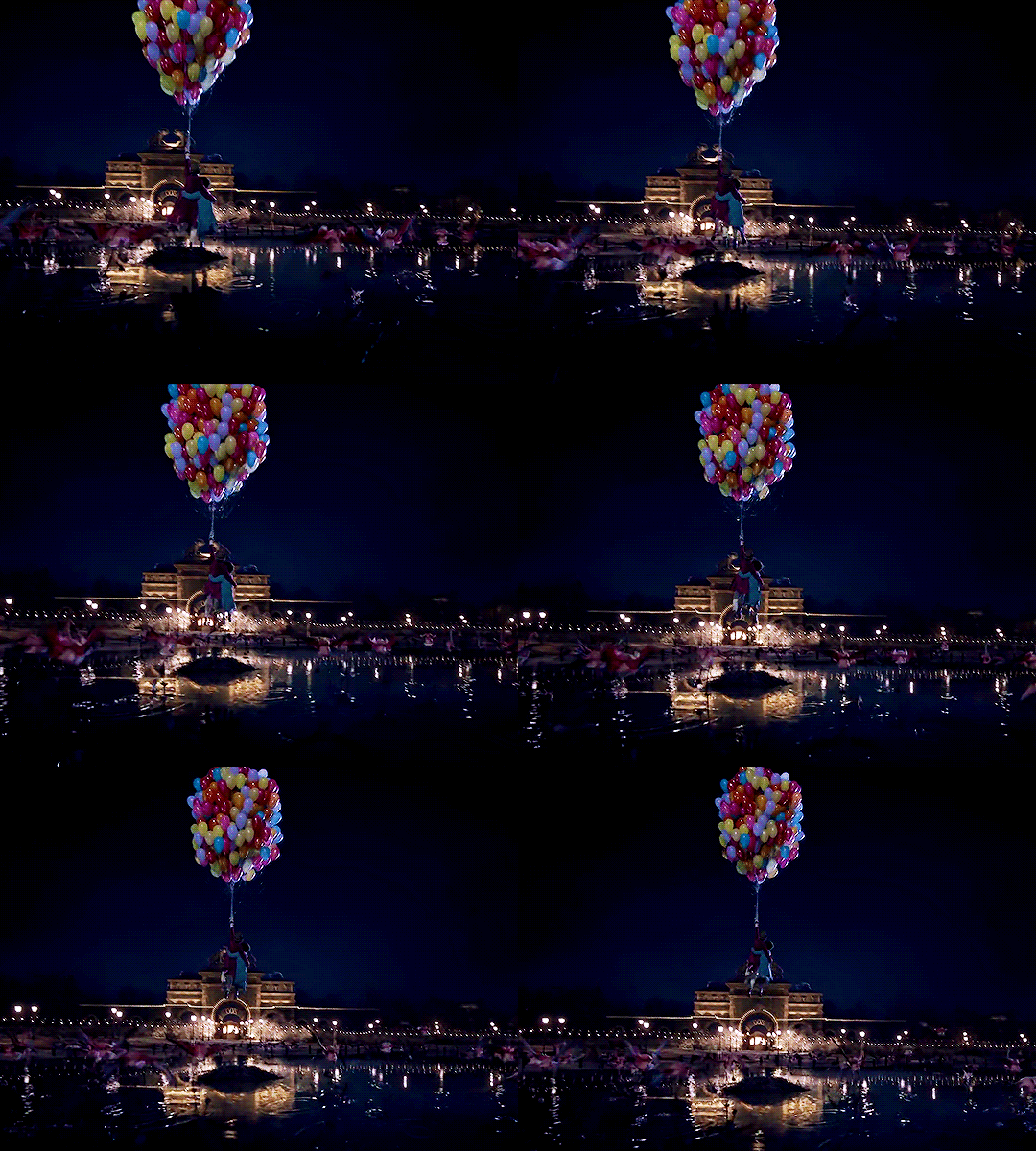
Maybe I’m seeing what I want to see, but the little nods to the Up! balloon cart and Turnip Head from Howl’s Moving Castle make this B&E feel enchanting.
Fueled on sugar and purpose, the Chief of Police crashes this wholesome infusion of whimsy to remind Wonka he is not welcome to sell his wares in this town. When Wonka mentions to Mr. Crunch he was accosted for being a chocolatier, Abacus reveals the entire chocolate conspiracy, as he was Slugworth’s accountant (for one week). After tasting the quality of Willy’s goods, he and his fellow debtors are more than keen to form a ragtag Fantastic Mr. Fox-like heist team who is only focused on letting Wonka sell candy at discount prices.
Nice to see Nurse Barbara Gilbert switched up their profession to a much less depressing flower shop owner and is accepting chocolate from insecure men.
Although temporarily sidetracked by Hugh Grant’s interesting rendition of an angry-dancing Oompa Loompa, the debtors’ plan is going swimmingly, covertly selling chocolate and earning enough to rent the vacant shop downtown for a week – a location where they can stock the storefront with edible teacups and Paul King’s favorite cherry blossom tree from which the now plump Chief of Police can’t legally stop them.
…Or so they thought. In the background, the Chief of Police has dug up enough dirt on the motley crew and informs Slugworth and the lot what manhole cover their chocolatiers have been scuttling out of. Slugworth informs Mrs. Scrubitt of her “employees” extracurricular activities and sabotages Wonka’s opening day by poisoning the chocolate, turning anyone who consumes it into a Dr. Seuss character. The parishioners react completely reasonably to Wonka’s explanation behind their new hairdos by completely trashing the shop and setting it on fire.

Wonka is understandably devastated, but not for the reason his friends expected. Willy literally thought opening his shop would resurrect his dead mother because she promised she would be there when he shared his chocolate with the world. While his friends leave him alone to mourn, the cartel confront Willy and offer him a deal: They will pay off the debts of him and his friends if he gets the fuck out of town and never makes chocolate again. He takes the deal to let his dreams die, set his friends free, and fulfill his promise to Noodle to give her a better life.
After Wonka boards the boat to Somewhere-else-ville, Hugh Grant comes up to him and is like, ‘dude, you still owe me some chocolate, so you better nut up and get back to it’. And while Wonka contemplates changing course, he realizes Slugworth’s very strong business handshake left an indent of his signet ring – a ring that looks almost identical to Noodle’s necklace. Willy decides to head back and inform her, which is great because the freighter he’s travelling on is grimly rigged to blow the fuck up?! He meets up with the old gang and they hatch a plan to break into the cartel’s underground bunker, steal the ledger of all their dirty deeds and expose them for the criminals that they are. They achieve this by… filling the church with a giraffe before a literal funeral to distract the priests.

Of course they are caught and confronted by the cartel mid heist, and Willy reveals to Noodle Mr. Slugworth’s true motivations behind his insidious actions. Noodle is Slugworth’s niece, and upon learning his brother died leaving behind a child her mother couldn’t afford to take care of, his first thought was Oh no, she may take over my sweet, sweet chocolate empire! and immediately throws the baby down a laundry chute. Once found, she’s “adopted” by Mrs. Scrubitt and the rest is history.
The cartel’s plan to stop their annoyingly persistent problem, bafflingly, is to completely taint their entire vat of chocolate by drowning Wonka and Noodle in it, much like how Landfill died in Beerfest. Although maybe they’re not worried about breaking health department regulations since they already have the police in their pocket, but like… gross, guys. I will tolerate all kinds of unacceptable behavior short of finding a hair in my chocolate bar.
I’m seriously hoping whatever substance they dipped these actors into smelled considerably better than Willy Wonka’s original chocolate factory river.

When circumstances couldn’t seem more dire than death by chocolate, the oompa loompa, in the same unsettling way Yoda does in Attack of the Clones, breaks into the cathedral to save our heroes and expose the villains. When the evidence is presented to Officer Affiable, he surprisingly crosses the thin blue line and holds the Chief accountable for his continued corruption. Willy Wonka is now free to sell his chocolate to his adoring fans.
In his moment of triumph, Willy finally opens his mother’s last chocolate bar, revealing a golden ticket that reads, “The secret is, it’s not the chocolate that matters, it’s the people you share it with”. His mother appears to Willy one last time to wave goodbye, and he decides to share the bar with his friends. I’m not crying, you’re crying.
If that’s not enough to bring a tear to your eye, knowing the name of Noodle’s mother, the telephone operator tracks her down and reunites her with Noodle, giving her the time back with her mother that Wonka wished he had. Her mother is a librarian, of course, fulfilling Noodle’s own dream to live among a never ending supply of books. Abacus Crunch reunites with his family, Piper Benz reunites with her friends, Lottie Bell gets her job back, and Larry Chucklesworth launches a successful career as a comedian and reunites with his wife. Awwww….
Which leaves Wonka and the Oompa Loompa to, y’know, go on and make a sequel. They’re drafting up Wonka 2, so it seems this franchise will never let me go. If it’s not called The Revenge of Slugworth, I may boycott.

While I acknowledged earlier this film feels like it fits snugly in the Dahlverse, the vibes on Wonka are completely different from the other Roald Dahl adaptations. I believe it may be attributed to the absence of a sinister underbelly that unsettles the audience. Sure, Mrs. Scrubitt and Mr. Bleacher are predatory payday loan providers that imprison their debtors, and there’s a secret cabal of chocolatiers that try to murder a man who has a song in his heart and sugar in his pocket, but the villains are too silly to be scary. And maybe that’s my Olivia Colman bias coming through because even when her character is doing the fucking worst, I can’t help but find everything she does absolutely charming.
The tone shift is most likely why I enjoyed this adaptation more than the others. It’s cozy like Paddington and more stylistically aligned to an Astaire movie than the 1971 Willy Wonka and the Chocolate Factory. It’s referential to its most famous source material by including the Oompa Loompa song and “Pure Imagination”, but this time the entire town is so joyous that one bite of Wonka’s chocolate has them tip tapping their feet on the trolley and marrying the flowershop girl. It’s in contrast to the entitled and ungrateful demands to Wonka that we see in the previous film. Not to say this isn’t by design; Willy Wonka didn’t start out as a bitter psychopath, he became one. Wonka is intended to be a florescent preamble to a darker story; an adorable romp where Willy’s colorful chocolate and cheery disposition brighten up drab ‘ol London and its occupants. It’s also not a children’s movie that condescends, and surprisingly not a cash-grab nostalgia-bait IP slopfest, either. It’s a rainy day with a hot mug of cocoa and a big blanket movie.
All that said, if Gene Wilder’s (or heaven forbid, Johnny Depp’s) depiction of Willy Wonka is your end all be all, I’m not sure this movie will hit the same notes for you. It may feel too precious, and, y’know, that’s fair. I too was unconvinced the world needed another Roald Dahl movie. But after living in the world of Wonka for a few hours and being brought to tears by a dead mom’s lunchbox note, I’m fully on board with whatever quaint musical movie Mr. King wants to direct next.